


The Seven Disciplines of Great Governance, Explained
The Board Excellence Assessment is built on the Governance Excellence Model (GEM), a seven-discipline framework for understanding and improving how boards govern. Developed by OrgHealth and first published in best-seller The Imperfect Board Member, it's the foundation for everything the BEA measures.

What Is the Governance Excellence Model?
The Governance Excellence Model (GEM) maps the work of a board across seven disciplines, each representing a distinct area of governance responsibility. Rather than treating governance as a compliance checklist, the GEM frames it as a set of active, ongoing roles that boards must perform well, and balance, to lead effectively.
At its core, the GEM holds that the primary role of a board is to Direct and Protect: to set organizational direction and safeguard owner interests. Every other discipline serves or enables that central purpose.

Direct
Organizational Performance
Define and refine the vision, mission, and values. Determine key result areas and what success looks like for the organization.
Protect
Owner Interests
Ensure compliance through auditing and reporting. Maintain a culture of accountability without crowding out performance.

Connect
for Healthy Board Relationships
Establish shared expectations and effective team dynamics among board members. Build the communication processes that let the board function as a unit.

Expect
Great Board-Management Interaction
Communicate organizational expectations clearly to management. Confirm CEO performance and keep the board-management relationship healthy.

Respect
Owner Expectations
Listen to owners, invite their input, and explain board decisions and results. Maintain the trust that gives the board its mandate.

Select
Prominent Leadership
Choose people with the skills, values, and credibility to fulfill their key responsibilities.

Reflect
on Organizational Results
Analyze operational outcomes and understand why performance deviates from expectations. Learning from results closes the governance loop.
Want to go deeper? Read The Role of the Board: Governance Excellence Explained on the OrgHealth site.
The Board Excellence Assessment scores your board against all seven disciplines, giving you a clear, discipline-by-discipline picture of where governance is strong and where attention is needed.
See How the Assessment Works →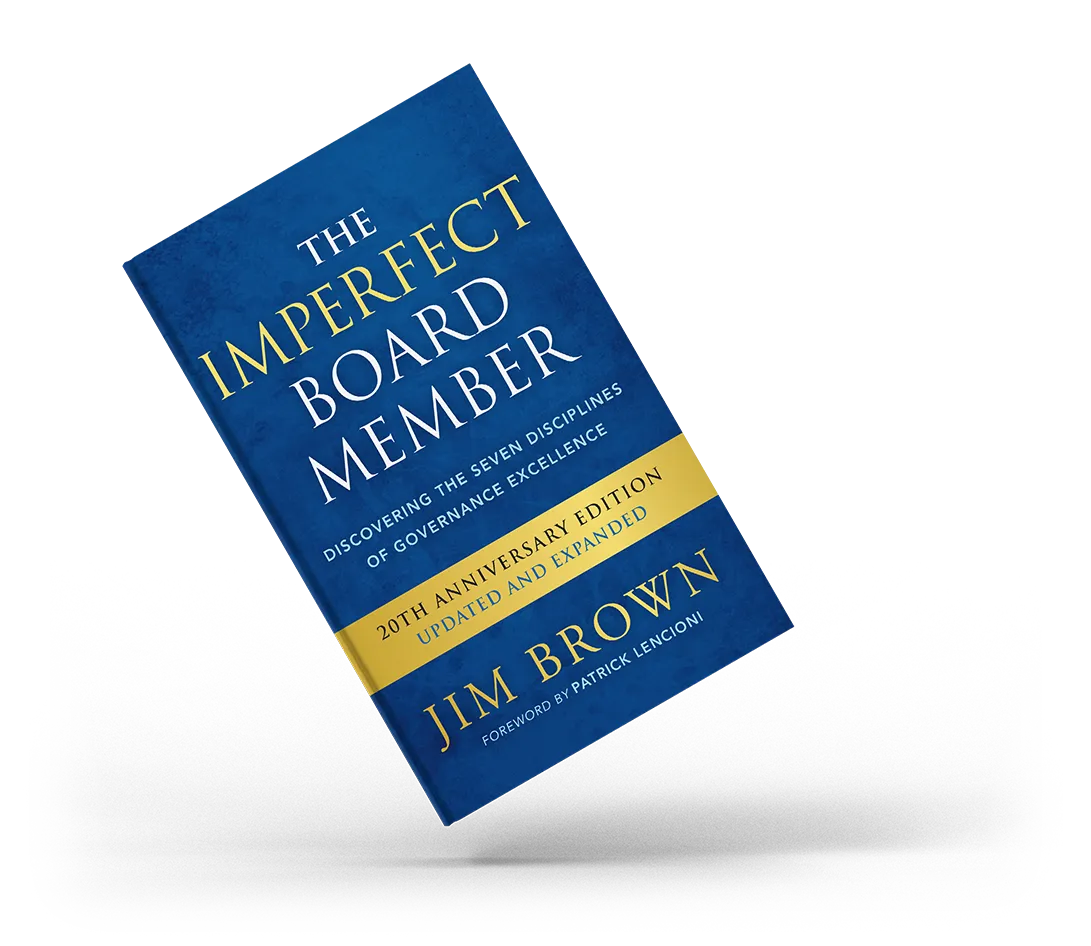
Where the GEM Began: The Imperfect Board Member
The Governance Excellence Model was introduced in The Imperfect Board Member by Jim Brown. This best-selling governance fable follows a new board member navigating the real dynamics of governance, and uses their experience to introduce the GEM as a practical model for doing the job well.
It remains the best starting point for anyone who wants to understand the thinking behind the BEA. The model isn't abstract theory. The book shows it in action, in the nuanced, human context where governance actually happens.
Get the BookSee How Your Board Measures Up
The BEA applies the GEM to your board: anonymous input from every member, structured into a report built for real conversation.